a moment in time

.

the seat was hard and slick.  my legs aching to walk, to run, to be anywhere but in that room.  but then i heard the number 2000.  no way could i think of that as the number of a year.  we were all asked to think what age we would be in that year, and my seventh grade mind shivered at the thought of the age of forty-five.  i couldn’t even imagine it.  certainly it would be such a long time from now…would i ever reach that age?  
after deaths of family and friends in the next few years, old and young alike, i would remember this question.  yes, would i even be alive in the year 2000?  i had lived longer than some of my friends and my two cousins.  it felt like i had already been given a gift of more time.  
my forty-fifth birthday came and went and there i was.  in the place so far from that seventh grade classroom, and from the teacher that was looking so young in his crisp, white shirt and a tie.  he has to be in his seventies…or dead, by now.  if not for him, i wouldn’t have thought of it.  not for a minute before it hit the front page.  not until i was at least thirty-nine, i bet.  
photo: a wild rose, taken at the park yesterday while cj took a tennis lesson.
also posted at “to see a flower” along with other photos of friendly flowers.

in the garden

.

.
the poppies are blooming and i took some photos…

Poppies have long been used as a symbol of both sleep and death: sleep because of the opium extracted from them, and death because of the common blood-red color of the red poppy in particular. In Greek and Roman myths, poppies were used as offerings to the dead. Poppies used as emblems on tombstones symbolize eternal sleep. This symbolism was evoked in the children’s novel The Wizard of Oz, in which a magical poppy field threatened to make the protagonists to sleep forever. Oddly, the poppy field affected the film’s characters in the same order the cast members actually died.
A second interpretation of poppies in Classical mythology is that the bright scarlet colour signifies a promise of resurrection after death.
info from wikipedia


the photos that i took of the poppies yesterday inspired me to start a new blog for flowers only.
the shot above is the first post.  the name of the blog is “to see a flower” and i have a button
for it which you can find at the bottom of the page.

morning

.
.

photograph . mountain hood at break of day . portland oregon . february two thousand ten.


“morning” is the word prompt this week.  the “three” from here and there are claire, kelly and sarah.
click on the above button for their blog and the post with links from all “morning” photo contributors.

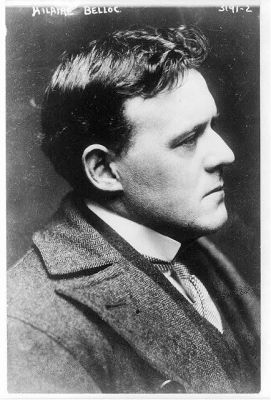
Hilaire Belloc

.

Joseph Hilaire Pierre Rene Belloc
A writer, orator, poet, satirist, man of letters and political activist.
He is most notable for his Catholic faith, which had a strong impact on most of his works and his writing collaboration with G. K. Chesterton. He was President of the Oxford Union and later MP for Salford from 1906 to 1910. He was a noted disputant, with a number of long-running feuds, but also widely regarded as a humane and sympathetic man.
Born July 27th 1870 in La Celle-Saint-Cloud, France to a French father (Louis Belloc) and an English mother (Elizabeth Rayner Parkes).
Elizabeth was also a writer, and great -granddaughter of the English chemist  Joseh Priestley.  In 1867 she married attorney Louis Belloc, son of the French painter Jean-Hilaire Belloc.  Five years after they were married, Louis died.  Louis had been wiped out financially in a stock market crash.  Elizabeth took her son Hilaire and daughter Marie back to England.  Hilaire remained in England, except for his voluntary enlistment as a young man in the french artillery.
He served his term of service, as a French citizen, with a regiment near Toul France in 1891.  After his military service he obtained first class honors in History from Balliol College, Oxford.  He was president of the oxford union, the undergraduate debating society.  
He was powerfully built, with great stamina, and walked extensively in Britain and Europe. While courting his future wife Elodie, whom he first met in 1890, the impecunious Belloc walked a good part of the way from the midwest of the United States to her home in northern California, paying for lodging at remote farm houses and ranches by sketching the owners and reciting poetry.
Hilaire and Elodie were married in 1896.  In 1906 he purchased land and a house called King’s Land as Shipley, West Sussex where he brought up his family and lived until shortly before his death.  They had five children before her death in 1914 from influenza.  After her death, Belloc wore mourning for the remainder of his life, keeping her room exactly as she had left it.
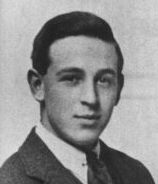
His son Lewis was killed in 1918 while serving in the Royal Flying Corps in northern France.
Belloc had a stroke in 1941 and did not recover from it’s effects.  He died on July 16th 1953.
~
Elodie
Elodie Agnes Hogan was born in 1868, the daughter of Irish immigrant parents. She was raised in Napa, California by her widowed mother who was the proprietor of a hotel there. As a young woman, Elodie considered joining a religious order, but also aspired to a career in journalism. Photograph from the Hilary A. Belloc Collection, MS1998-004, Box 2,Folder 22, John J. Burns Library, Boston College.
American Elodie Hogan (1868 – 1914), age 22, met Hilaire Belloc (1870 – 1953), two years her junior, in London while touring Europe with her mother and elder sister in the summer of 1890. They were introduced there, at the Belloc family home, by mutual friends. By August, though already in love, Elodie was on her way back to her home in California. The couple began exchanging letters, and it was not long before Hilaire began a journey across ocean and continent to be with her again. Short of funds for such a trip, he traveled across the United States by train, paying his way at times by offering sketches in exchange for room and board.  Family objections and practical considerations kept the two from marrying immediately, but although Hilaire returned to Europe, they wrote to one another throughout the intervening years. He returned to California in 1896 and the couple wed in June. The Bellocs had five children – three sons and two daughters. In 1913 Elodie became ill with what was probably cancer, and she died at the family home, King’s Land, in 1914. When she died, Hilaire, heartbroken, closed the door to her room and it was never again opened in his lifetime.





Information obtained from Wikipedia and John J. Burns LIbrary’s Blog.

stolen words . 3

.
they rioted in Vancouver last night.
it is empowering to break a board with your bare hand
especially if you believe before you get there
that you cannot do it.
at eight, she already measures
the distance,
the board where she stands
i’m not going into the jail tonight
as an expert on communication
we’re the only ones who do this
we tried to teach our children
to never pay back each other for wrongs
so when my youngest asked me
to get into the hamster wheel
i didn’t hesitate

~

i should probably explain.  yes, i do… i actually steal the words for the stolen words poems.  with the help of google reader, i go through the most recent posts of the blogs that i am subscribed to.  as i go, i steal a line from the first blog’s post, then i go to the next blog’s post and steal the next line.  i keep this up, adding stolen lines, until it seems the poem is done.

mere christianity . by csLewis

When i make a stir fry my kids like to pick the things they like out of the pan

and leave the other things that are less liked.  Same thing when i make my pasta
dish with bacon, if you are too late to dinner you get a little less bacon and more pasta.
One of the points Lewis made in the chapter called social morality:
“We have all departed from the total plan in different ways, and each of us wants to make out that his own modification of the original plan is the plan itself.  You will find this again and again about anything that is really Christian: every one is attracted by bits of it and ants to pick out those bits and leave the rest.  That is why we do not get much further: and that is why people who are fighting for quite opposite things can both say they are fighting for Christianity.”


1919
The February issue of Reveille contained “Death in Battle,” Lewis’ first publication in other than school magazines. The issue had poems by Robert Bridges, Siegfried Sassoon, Robert Graves, and Hilaire Belloc. From January 1919 until June 1924, he resumed his studies at University College, Oxford, where he received a First in Honour Moderations (Greek and Latin Literature) in 1920, a First in Greats (Philosophy and Ancient History) in 1922, and a First in English in 1923. His tutors during this time included A.B. Poynton for Honour Mods, E.F. Carritt for Philosophy, F.P. Wilson and George Gordon in the English School, and E.E. Wardale for Old English.

1920

During the summer, Paddy Moore’s mother, Mrs. Janie King Moore (1873-1951) and her daughter, Maureen, moved to Oxford, renting a house in Headington Quarry. Lewis lived with the Moores from June 1921 onward. In August 1930, they moved to “Hillsboro,” Western Road, Headington. In October 1930, Mrs. Moore, Jack, and Major Lewis purchased “The Kilns” jointly, with title to the property being taken solely in the name of Mrs. Moore with the two brothers holding rights of life tenancy. Major Lewis retired from the military and joined them at “The Kilns” in 1932.


1921

W.T. Kirkpatrick died in March. Lewis’ essay “Optimism” won the Chancellor’s English Essay Prize in May. (No copy of “Optimism” has been found as of this date.)


chronological information from the C.S. Lewis foundation
Check out more with our very nice book club host, Sara Salter at Living Between the Lines.

stolen words . 2

.
i do not consider myself a good writer
this just wasn’t the plan
the world buzzes about goals and visions
my heart beats only to mess up my head
i can see i will need to write things down
sometimes truth comes to us on a bathroom wall
you want to know a secret?
summer is here
the days tumble from one moment to the next
it can actually kill a person if eaten
the nature of temptation

.

stolen words

When you’ve had enough
in a frenzy of garden visiting
a long way from home
treat yourself to a visit to Edinburgh
to this place
i’ll tell you about it later
when we’re back home
If you’re in Paris this summer
please give yourself a treat
photos and memories
lurking in the background
beautifully luminous
a big yummy stash
of roadside flowers
These are strange times
there are many
who will not wish to leave
this summer
but, too late
it will be useless in this event
i’ll report back soon

yes
i stole some words
but, you know they’re better off here

book

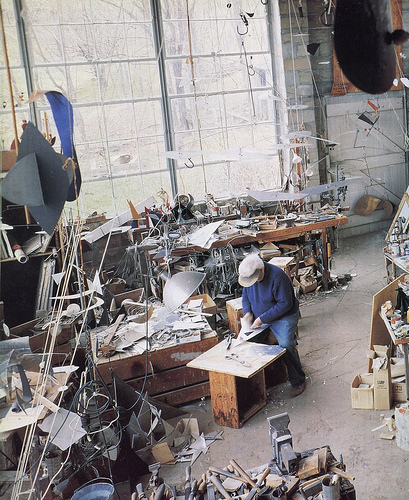
calder at home: the joyous environment of alexander calder
by pedro e. guerrero
i ordered this book from amazon a few days ago.  when i first saw it the price was really high so i just left the thought alone for awhile.  i was looking at some other books and decided to check back on it and there was a used one for the very reasonable price of $16.51 ($20.50 with shipping).  so i went for it.  i’m really looking forward to turning those pages.  still at amazon are seven new ones that range in price from $130.00 to $526.12, twenty used ones starting at 39.99 to $288.06, and one collectible at $84.95 (first edition first print hard cover in jacket).

driving force

.

The world insists on a person becoming something that fits on one label, looks good on a book cover,
and has a catch.

If you want to be seen by the world, you must become approved and desired by an intended market.

I don’t want this as my driving force, my focus, or my God.

The world can think what they like of me, give me a label, have no idea about me, approve or disapprove.

My God must be my driving force and my focus.
God knows me and has a special name for me.
It is His approval that is important.

.